

Cart
0
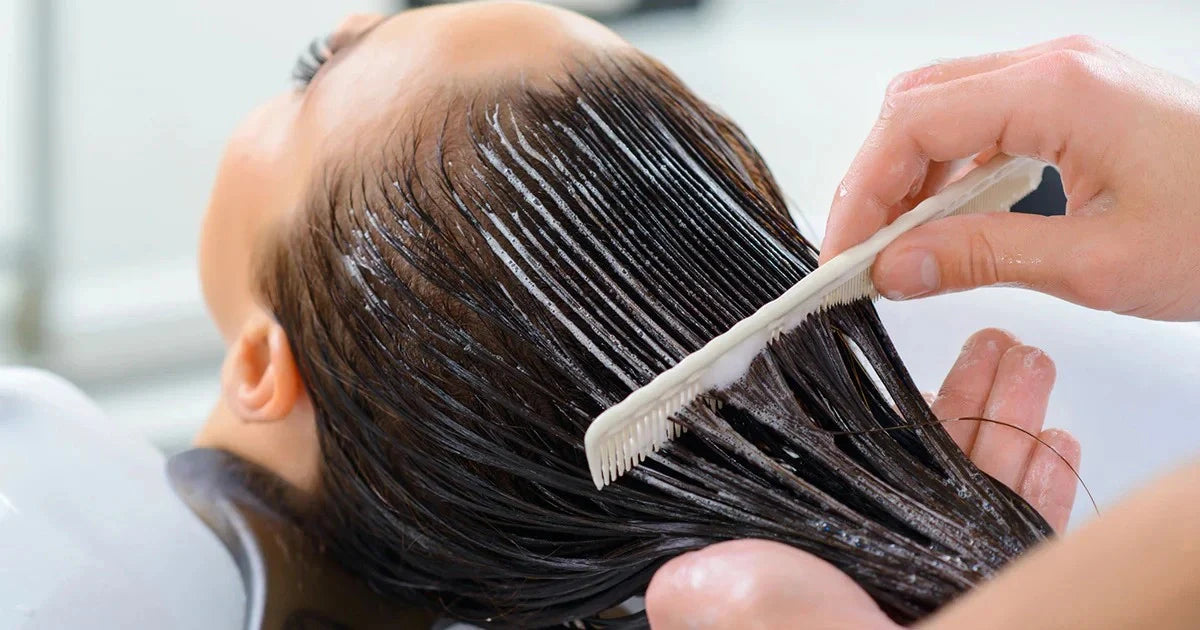
When do you actually hear someone talking about how they step into the shower to wash their hair, and walk out with an even tighter, uncomfortable, itching scalp? Lots of people you know probably think that swapping out their shampoo and conditioner are the solutions to the problem, but the shampoo is probably not even involved in the issue.
You may think that best hair masks for dry scalps is not the most complicated google search, but actually most people never even think about using hair masks as scalp treatment, and probably have hair masks that are 5, 6, or even 7 years old just sitting in their cabinets.
The breakage, split ends, and dry lengths with the unaddressed dryness of the scalp just cycles on and on. This article is about creating a break from the cycle of chronic dry scalp that explains how to do it.
What Is Actually Happening at the Scalp
The dry scalp post hair wash problem is not as simple as it may seem. It is almost always a result of a number of multiple issues.
To begin with, there is an issue with the cleanser that they are using. The issue with using sulphate shampoos is that they strip the scalp of all of its natural sebum, and as a result, the skin barrier becomes compromised. This results in the scalp tightening and flaking, and in some cases, the scalp is more oily than usual, and therefore people wash their hair more frequently, and the cycle becomes even more pronounced.
The second issue refers to the absence of significant scalp nourishment following cleansing. Most post-wash habits are about the hair shaft. The scalp is neglected. It is skin and having the same needs as skin. It gets nothing. No moisture, no barrier, no repair, and no support.
These two issues combined worsen the scalp experience, it is habitually dehydrated, reactive and unable to provide the healthy environment necessary to support hair growth.
Why a Hair Mask Changes This
A well-formulated hair mask does something a conditioner cannot. Conditioner works quickly by design, two to three minutes, mostly surface-level, primarily targeting detangling and shine. A mask has a longer contact time and a denser ingredient concentration. When applied correctly to both scalp and lengths, it delivers moisture and protein at a level the scalp skin can actually absorb.
The key phrase there is "applied correctly." Most women apply a hair mask from the mid-lengths to the ends, which is appropriate for a damage-repair mask. But for dry scalp specifically, the application needs to start at the scalp itself, gently worked in with fingertips, not nails, covering the entire scalp surface before moving down the lengths.
Five to ten minutes at this concentration makes a visible difference, especially when it is done consistently once a week.
The Weekly Mask Routine That Works
Here is how to structure the routine:
Before you shampoo:
- Detangle dry hair gently with a wide-tooth comb
- If your scalp is very dry or flaky, apply a few drops of a light oil like argan oil to the scalp and massage for two to three minutes before washing, this acts as a pre-treatment buffer
During the wash:
- Use a sulphate-free, paraben-free shampoo only
- Focus the shampoo on the scalp, not the lengths
- Rinse thoroughly, product residue on the scalp is a common but underreported trigger for post-wash dryness
The mask step:
- On towel-dried hair, take a generous amount of a keratin-enriched hair mask
- Start at the scalp, section by section, working it in with your fingertips
- Move to the mid-lengths and ends last
- Leave for five to ten minutes, do not rush this
- Rinse with lukewarm water, then a brief cool rinse to close the cuticle
After wash:
- Do not rub the scalp dry with a towel, press gently or use a microfibre towel
- Avoid heat on the scalp directly during blowdrying, diffuse or keep the dryer at distance
Done once a week, this routine addresses dry scalp from two angles: reducing the stripping damage during washing, and actively nourishing the scalp surface after.
What to Look for in the Mask Formula Itself
This is where the routine either works or does not. Not all masks are formulated for scalp use. A mask for the best hair mask for dry scalp result needs specific ingredients:
- Hydrolysed keratin, repairs the scalp's surface barrier alongside the hair shaft
- Argan oil (Argania Spinosa Kernel Oil), calms dryness and seals moisture without clogging follicles
- Wheat protein, supports the hair's structural integrity from root level
- No sulphates or parabens, anything that strips during cleansing undoes what the mask just put in
What to avoid:
- Mineral oil in large quantities, it sits on the scalp rather than absorbing
- Strong fragrance as a primary ingredient, scalp skin is often reactive and fragrance sensitivity is common
- Silicones that are not water-soluble, they build up at the scalp over time and make dryness worse not better
Dione UK Keratin Enrichment Hair Mask
The Dione UK Keratin Enrichment Hair Mask (250ml) checks the right boxes for a dry scalp routine. It is formulated with argan oil and keratin together, which means it addresses both the moisture gap and the structural damage that leaves the scalp compromised after washing. The formula is sulphate-free and paraben-free, which matters specifically here because any residual stripping ingredient in a mask format defeats the entire purpose.
Applied to towel-dried hair from scalp to ends and left for five to ten minutes, it moisturises dry strands, smooths rough texture, and gives the scalp the barrier support it needs to stop the post-wash tightness cycle. Used once a week alongside the Dione UK Keratin De Luxe Shampoo, the improvement in scalp condition is noticeable within two to three weeks.
For salon professionals, this is the kind of best hair mask for dry scalp recommendation that clients actually come back to thank you for. It is not a dramatic claim. It is a consistent, ingredient-sound routine that does what it says.
For clients dealing with chronic post-wash dryness, the answer is rarely a new shampoo. It is a better routine. And that routine starts with what happens after the wash, not during it.
Explore the Dione UK Keratin Enrichment Hair Mask and the full Keratin De Luxe range at dioneuk.com.
FAQs
1. Why does my scalp feel dry and itchy after washing my hair?
This usually happens due to sulphate-based shampoos stripping natural oils and a lack of post-wash scalp nourishment, leading to a compromised scalp barrier.
2. Can a hair mask be used on the scalp for dryness?
Yes, a properly formulated hair mask can be applied to the scalp to deliver deeper moisture and repair compared to regular conditioners.
3. How often should you use a hair mask for dry scalp?
A hair mask should be used once a week for 5 to 10 minutes to restore moisture and improve scalp health over time.
4. What ingredients should you look for in a hair mask for dry scalp?
Look for hydrolysed keratin, argan oil, and wheat protein, which help repair the scalp barrier, lock in moisture, and strengthen hair from the root.
5. What should you avoid in hair masks for dry scalp?
Avoid mineral oil, strong fragrances, and non-water-soluble silicones, as they can build up on the scalp and worsen dryness.


