
Total: ₹ 0.00
Taxes and shipping calculated at checkout


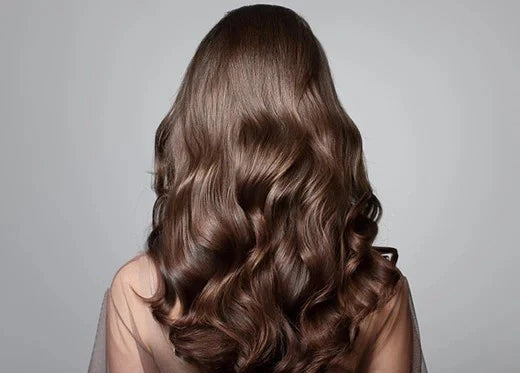
You think curl cream should work. Isn't that what the tutorials show? Isn't that what the packaging says? What about the before and afters? You bought what was marketed as the best curl cream for wavy hair. You followed the instructions, yet somehow, your waves turned into frizz by mid-morning.
Instead of attacking the product, remember that curl cream is the last step in a system. When that system fails, the problem almost always does not lie with the curl cream.
Curl cream does not establish curl definition. It maintains it.
That is the most important distinction in this conversation. If the hair underneath the cream lacks structure, if the cuticle is open and porous, if the wash itself is out of moisture balance, the cream has nothing to work with. It sits on top of instability, calls it a hairstyle, and after a few hours, everything unravels.
It is like painting a wall that hasn't been primed. The paint goes on and it looks good for a day. Then the entire thing starts to peel because the wall was unprepared.
Surface issues cause a lot of the frizz problems wavy and curl hair type people encounter. Curl cream gets the blame for failure that happened three steps before it.
This is where most routines have gaps. Not in the product choices, but in the sequence and the foundation underneath.
Wavy hair that frizzes after curl cream application almost always has a wash problem underneath it. Either the shampoo is stripping the hair shaft too aggressively and leaving the cuticle rough and reactive, or the rinse is incomplete and there is product residue sitting on the hair that the curl cream then has to work over.
A sulphate-free shampoo focused on the scalp, rinsed thoroughly with lukewarm water, sets the cuticle in a state that styling products can actually grip.
Most wavy-haired women either under-condition or condition in the wrong places. Mid-lengths and ends need it. Roots do not. Conditioner at the root zone weighs down the wave pattern at the base, which means the waves that do form sit on a flat foundation.
Two to three minutes, mid-length to ends, cool water rinse. That sequence does more for curl cream performance than switching brands does.
Here is what rarely gets mentioned in curl cream tutorials. Wavy hair that consistently loses its pattern by midday is usually protein-deficient. The wave needs structural protein in the shaft to hold its shape through humidity, movement, and time. Without it, any definition the cream creates is temporary.
A weekly keratin-enriched hair mask fills that structural gap. Four to six weeks of consistent use and the waves hold longer, not because you found a better cream, but because the hair finally has the internal structure to hold what the cream is giving it.
Even with the right foundation, application errors are extremely common. Getting the best curl cream for wavy hair result means paying attention to these:
The best curl cream for wavy hair in practical terms is not the most expensive or the most talked-about. It is the one formulated without the ingredients that work against wavy hair's specific needs.
What wavy hair needs in a curl cream:
What wavy hair does not need in a curl cream:
Silicone-free and mineral-free is not a wellness trend. For wavy hair specifically, it is an ingredient decision that changes how the hair behaves over time, not just on wash day.
The Dione UK Keratin De Luxe Curl Cream is built around the logic above, not around the marketing of definition.
It is silicone-free. Mineral-free. Paraben-free. The formula uses Curl Memory Technology with wheat protein and Argania Spinosa Kernel Oil - the two ingredients that matter most for wavy hair that needs to hold shape through an Indian summer afternoon.
Applied on damp hair with a scrunching motion, it defines without stiffness and holds without crunch. The wheat protein supports the wave structure from inside the shaft. The argan oil seals the surface so humidity finds it harder to break the pattern apart.
Pair it with the Keratin De Luxe Shampoo and Conditioner for the wash foundation, and add the Keratin Enrichment Hair Mask once a week for protein repair, and what you have is a complete system rather than a single product working against structural odds.
Clients who switch to this routine stop asking why their curl cream is not working. Because the cream finally has something worth preserving underneath it.
The best curl cream for wavy hair is not the cream that promises the most. It is the one that fits into a routine that has been built correctly from the first step. Explore the full Dione UK Keratin De Luxe range at dioneuk.com.
1. Why is my hair still frizzy even after using curl cream?
Frizz usually happens because the hair lacks proper structure, moisture balance, or preparation before applying curl cream, not because the product itself is ineffective.
2. Should curl cream be applied on wet or damp hair?
Curl cream works best on damp hair, as applying it on soaking wet hair dilutes the product and reduces its effectiveness.
3. Why is protein important for wavy or curly hair?
Protein helps strengthen the hair shaft and improves curl memory, allowing waves or curls to hold their shape longer.
4. What are common mistakes when applying curl cream?
Common mistakes include using too much product, applying on wet hair, raking instead of scrunching, and touching hair while it dries.
5. What ingredients should you look for in a curl cream for wavy hair?
Look for wheat protein, hydrolysed keratin, and argan oil, which help support structure, seal the cuticle, and improve definition without heaviness.

There is retention and breakage. Retention is what's not happening. Women tend not to discuss retention when talking about slow...

You think curl cream should work. Isn't that what the tutorials show? Isn't that what the packaging says? What about...

You are doing everything right. Or at least everything the label tells you to do. You used the top hair products...
